
Food & confectionery · United States · Meta Ads + Google Ads · Jan–Dec 2025
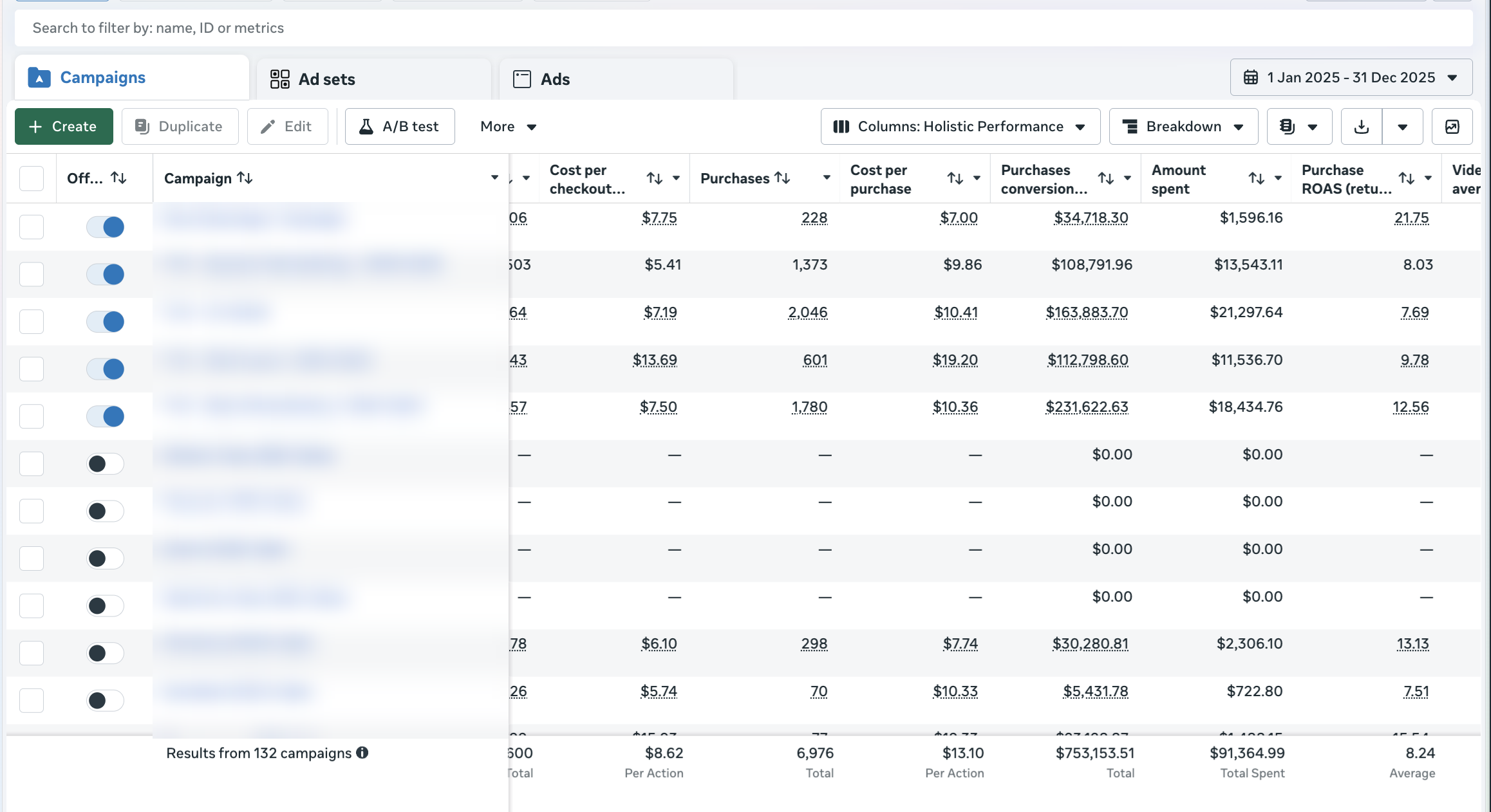
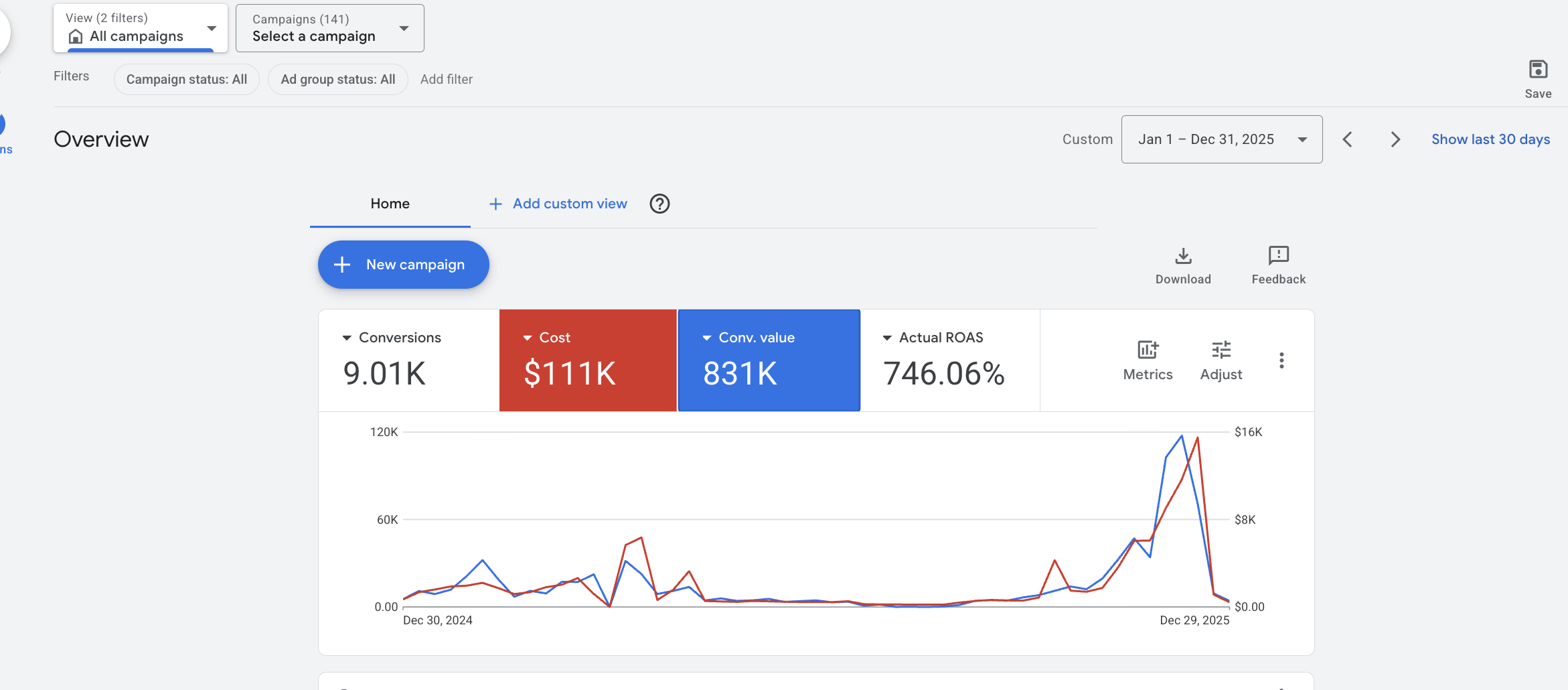
~$1.58M in revenue from $202K in ad spend, across Meta and Google in 2025.
The goal was to spend a lot more without losing efficiency, which meant replacing isolated campaigns with one system that gave every audience a job.
- ~$1.58M
- revenue
- 8.24x
- Meta ROAS
- 7.46x
- Google ROAS
Figures are platform-reported.
The challenge
- Cold, warm, high-intent and existing customers all needed different treatment.
- New creative had to be tested without disturbing the campaigns doing the scaling.
- Seasonal peaks were big revenue windows that evergreen campaigns couldn't capture.
- Spend had to grow on both platforms while staying profitable.
What I changed on Meta
- 1.
Advantage+ Shopping as the scaling engine. Catalog ads plus best-seller sets and proven ads only.
- 2.
A separate testing lane. New creative tested on broad audiences; winners promoted into scaling. Test, validate, scale.
- 3.
Every audience got a role. Dynamic remarketing for viewers and carts, mid-funnel for engagers and video viewers, retention for existing customers using first-party data.
- 4.
Value-based scaling. A highest-value campaign running only proven ads, so Meta chased bigger orders, not just more orders.
What I changed on Google
- 1.
Performance Max split by product category, for budget control and category-level visibility.
- 2.
Creative-rich PMax, feed plus assets plus first-party audience signals, not feed alone.
- 3.
Supporting roles: catch-all Standard Shopping and Branded Search, each with its own job.
Seasonal campaigns on both platforms: dedicated budgets, products and creative for each peak, scaled separately from evergreen.
Results (platform-reported, Jan–Dec 2025)
| Metric | Meta Ads | Google Ads |
|---|---|---|
| Ad spend | $91,365 | ~$111K |
| Purchases / conversions | 6,976 | ~9,010 |
| Cost per purchase | $13.10 | — |
| Revenue | $753,154 | ~$831K |
| ROAS | 8.24x | 7.46x |
| Initiated checkouts | 10,600 at $8.62 | — |
Why it worked
- Each audience and campaign had one job, so nothing competed with itself.
- Creative was tested apart from scaling, so winners were proven before they got budget.
- Seasonal demand was planned for, not squeezed into evergreen campaigns.