
B2B payment processing · United States · Meta Ads · June–August 2026
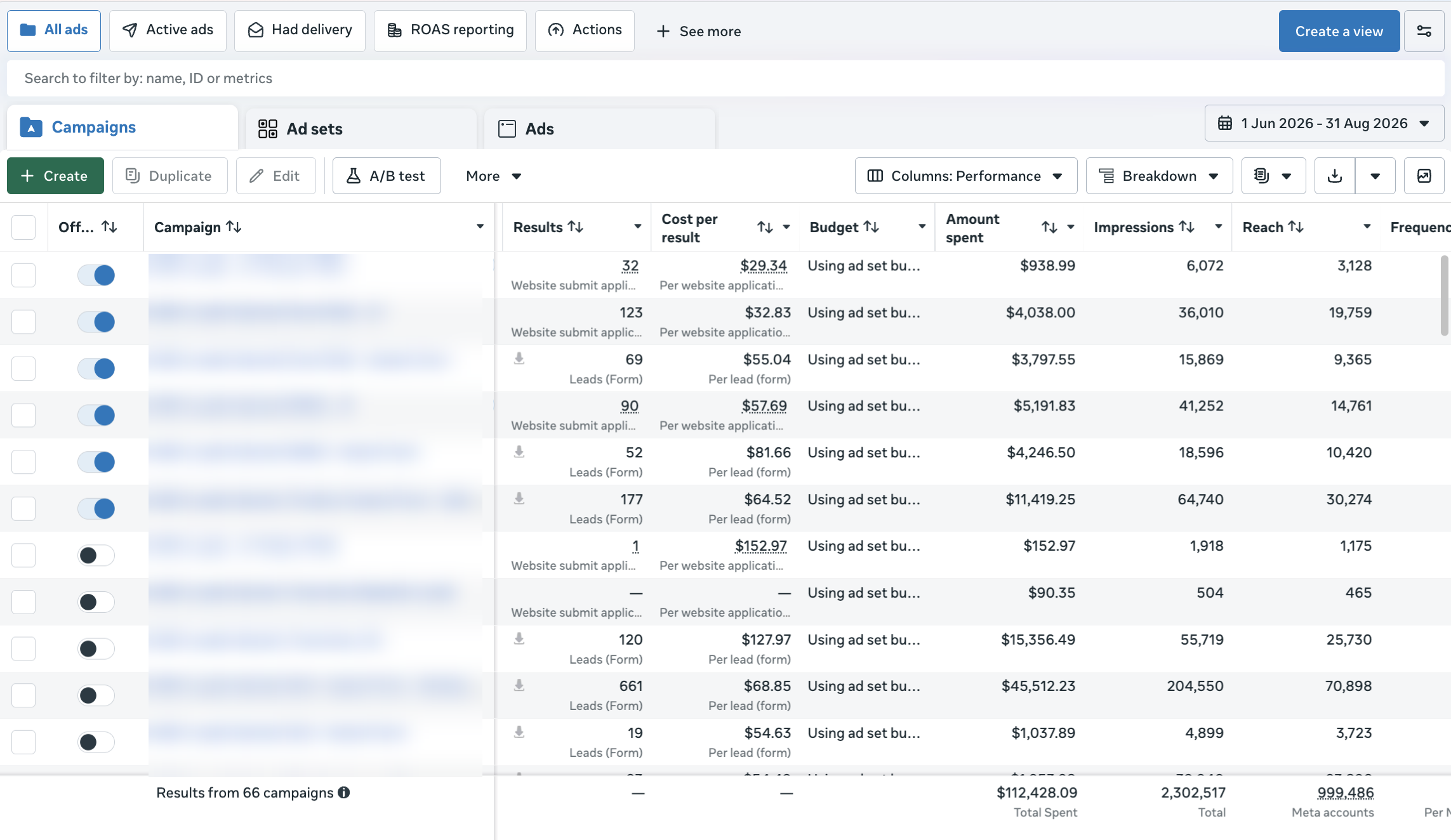
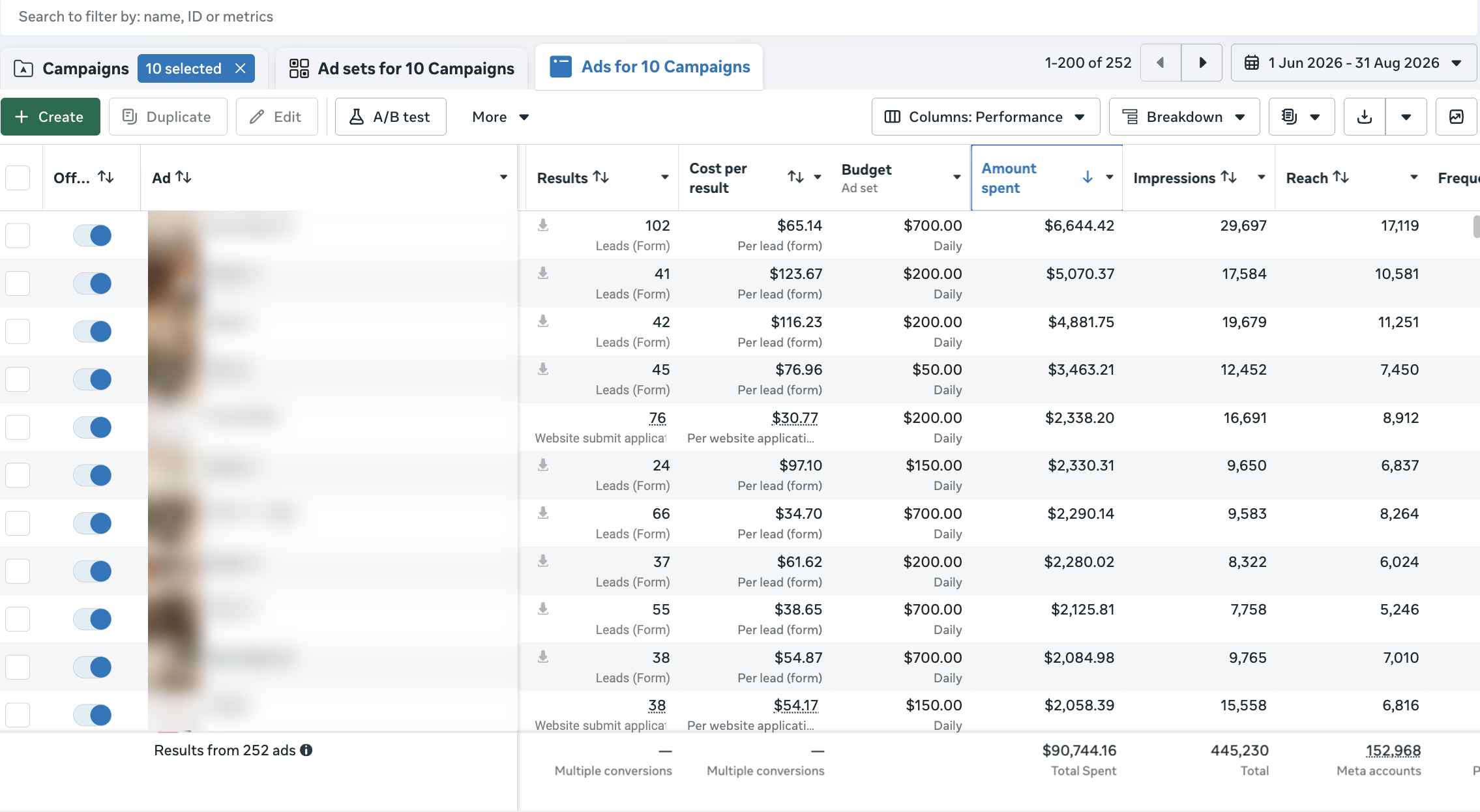
Lower CPL and better leads, at $110K+ in three months of Meta spend.
Cheap Instant Form leads didn't close, and website leads cost ~$96. The account needed both numbers to move in the right direction at once.
- ~$96 → $50–$70
- CPL
- 30%+
- qualified lead rate
- $110K+
- spend in 3 months
Figures are platform-reported.
The challenge
- Instant Forms brought volume but too many unqualified leads.
- Website leads were higher intent but cost ~$96 each.
- At this spend, creative fatigue had to be managed every week.
What I changed
- 1.
Tested landing page vs. SMS-verified Instant Forms. The added friction filtered weak leads and dropped CPL to $50–$70.
- 2.
Kept improving the website path. Page structures, form experiences, pop-ups and CTA placement brought website CPL consistently under ~$70. Two working funnels instead of one.
- 3.
Judged success by qualified leads, not CPL. A $70 lead that becomes a deal beats a $50 one that never does.
- 4.
Full-funnel audiences plus customer lookalikes built from first-party data.
- 5.
New creative every week. Hooks, angles, video, UGC, persona and industry versions. Every winning message was spun into new hooks, videos and variations.
Results (June–August 2026)
| Metric | Before | After |
|---|---|---|
| CPL | ~$96 (website) | $50–$70 (SMS-verified forms); under ~$70 (website) |
| Qualified lead rate | Lower (no baseline figure) | 30%+ |
| Meta spend | $110K+ in 3 months |
Why it worked
- Intentional friction (SMS verification) made cheap leads real leads.
- Two funnels competed on cost and quality, not on assumptions.
- Weekly creative and winning-angle iteration kept performance steady at six-figure spend.