
← Portfolio
Energy & hydration supplements · United States · Meta Ads · Dec 2025 vs. Jan 2026
10x the purchases, at a quarter of the cost, in the first month.
The brand was selling, but stacked interests, a few tired ads and a generic collection page were capping every dollar it spent.
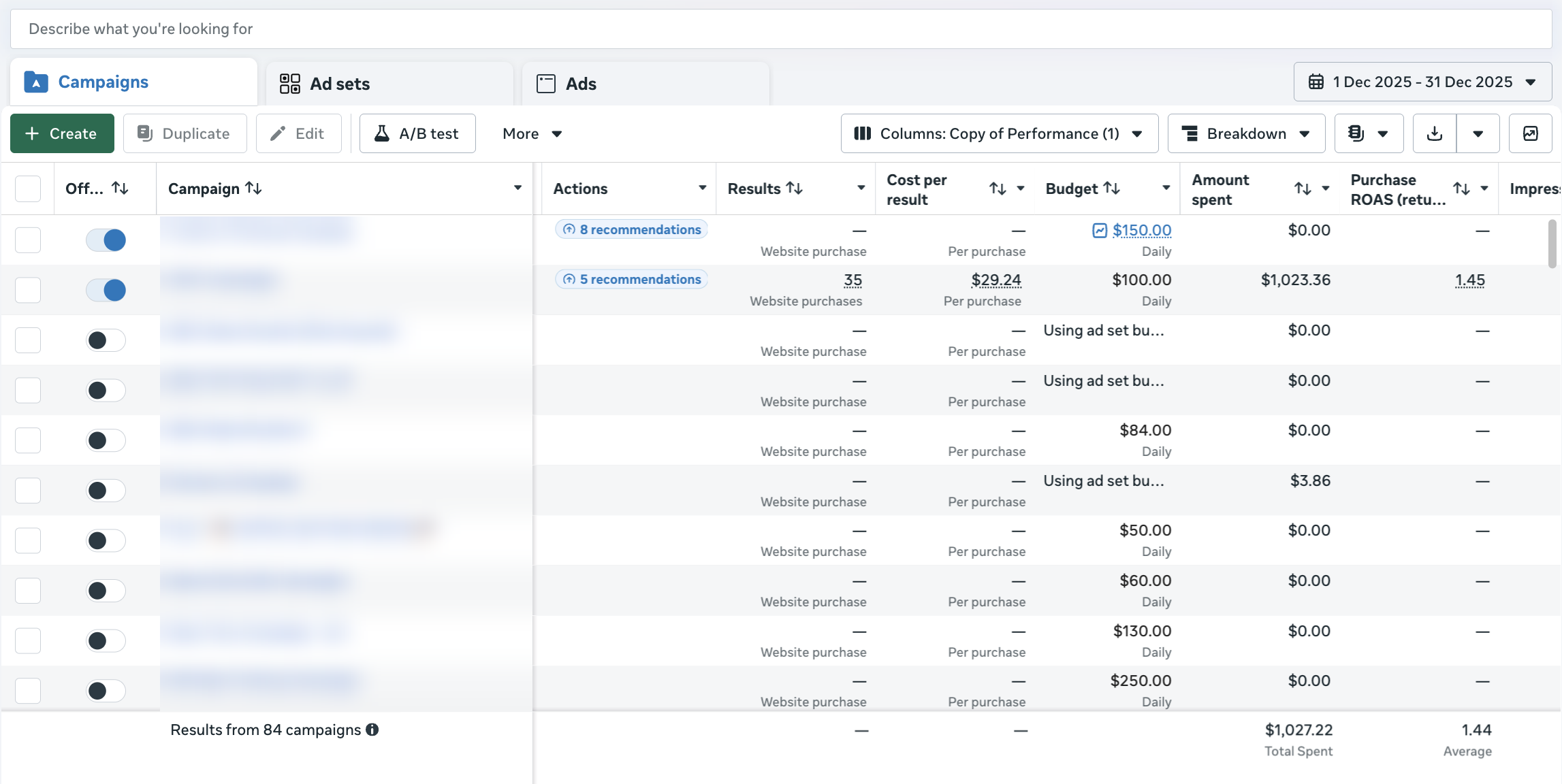
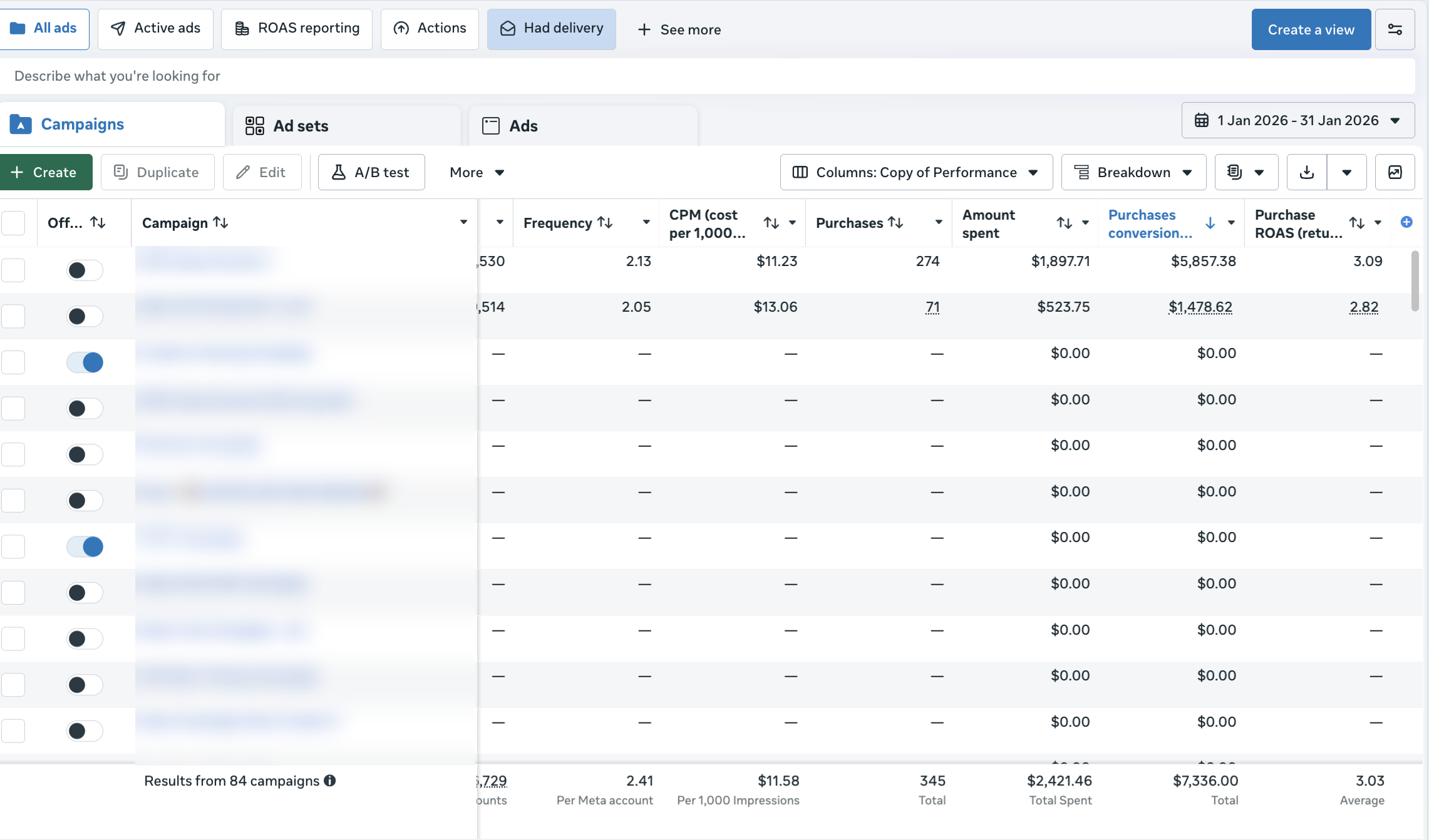
- $29.35 → $7.02
- cost per purchase
- 35 → 345
- purchases
- 1.44x → 3.03x
- ROAS
Figures are platform-reported.
The challenge
- Targeting relied on stacked interest audiences, limiting Meta's reach.
- Only a handful of creatives, so nothing to learn from and nothing to scale.
- Cold traffic landed on a collection page and had to hunt for the product in the ad.
What I changed
- 1.
Rebuilt the structure. One CBO campaign combining broad and stacked-interest audiences, giving Meta room to find buyers.
- 2.
Built a creative testing system. Multiple concepts and angles, with new variations spun from every winner.
- 3.
Fixed the post-click. Traffic went to a dedicated product page that matched the ad, showed reviews above the fold and removed the browsing.
- 4.
Proved it was repeatable. A second ABO campaign on broad targeting, using the winning concepts, held the same cost per purchase.
Results
| Metric | Dec 2025 | Jan 2026 | Change |
|---|---|---|---|
| Cost per purchase | $29.35 | $7.02 | −76% |
| Purchases | 35 | 345 | 10x |
| ROAS | 1.44x | 3.03x | +110% |
| CPC | $1.25 | $0.40 | −68% |
| Cost per add to cart | $7.39 | $2.11 | −71% |
| Cost per checkout | $7.72 | $2.44 | −68% |
| Conversion value | $1,480 | $7,336 | 5x |
| Spend | $1,027 | $2,421 | 2.4x |
Why it worked
- No single fix: targeting, creative and landing page changed together.
- Message match between ad and page removed the friction after the click.
- The second campaign proved the result wasn't one lucky ad.